Thursday, October 1, 2009
Give Obama More Time ...
... the title above my op-ed as it appears today in de Gelderlander (in Dutch). The Washington Post's Richard Cohen takes another position, but then there's also the New York Times's Cohen, Roger. As a column, Richard Cohen's piece is quite good; but as an analysis/policy recommendation, I like Roger Cohen's much better. For one thing, he knows something about Iran, having spent a good deal of time there recently.


Tuesday, September 29, 2009
No Obama Sell-Out
This is what I wrote in an op-ed for the GPD papers (Netherlands), late last week. I haven't seen the piece on-line anywhere yet, but when it does turn up somewhere, I'll link to it. The thing is, he's trying to institute significant change, and that takes time, especially because an American president today is much less powerful than his prominence in the news would suggest. There is America's reduced financial prowess, there's obstruction from great powers such as China and Russia, there's domestic pressures (protectionism!), and there are those enemies of the U.S.--unpredictable, and in most cases irreconcilable to any kind of international order. But the critics are mostly wrong (or premature): implied in the criticisms from the right is that a foreign policy more akin to that of George W. Bush would be better. But which Bush foreign policy do they mean? The unilateralism of the first term? What did that get us, exactly? Or the milder version of Bush's second term? The latter was certainly moving in the direction of what Obama is trying to do now. Yes, the president did drop his predecessor's missile-defense plans for Eastern and Central Europe--but he hasn't dropped missile defense at all. In a way, charges that he is too soft can't be rebutted, because his approach so far does in many areas emphasize talking instead of bombing. But what about all the dead Taliban and Al Qaeda commanders in Somalia, Afghanistan, and Pakistan? What about his increase in troop levels in Afghanistan during the first months in office? Let's not forget that we're still only eight months into this presidency. There is no telling what the administration might do if the current approach fails to produce the anticipated results in certain cases. But let's not forget either that on almost every tough foreign policy problem today--North Korea, Iran, Israel v. Palestinians--the more muscular alternatives out there look very unappetizing.
Friday, September 25, 2009
Better Commute
Another calm, mild fall day, perfect to ride home the long way (by way of IJburg and Muiden, instead of Weesp--this adds two miles). Had the wind at my back on the little climb up the Nescio bridge, and on the way down I put it in the big ring. With my new chain and cassette, I can use 53x19 without anything rubbing (on the old set-up, only the 17 and bigger would work well). I kept it there all the way into Muiden, doing probably around 20, but as I entered it someone passed me. Yes, another good rider, on a nice bike again. I got on his wheel as we rode through this little city slowly, and I stayed there as he accelerated leaving town. There, we passed another racing-bike-little-back-pack-commuter, but he did not get on the train. My guy didn't try to drop me, which given the nice, straighth and smooth bike path we were on might have been tough. But he did make me work harder than I do on my own on this bike. At the turn-off (Keverdijk) I thanked him for the ride, but he happened to go my way, so I sat on his wheel for two more miles. Then, it turned out he was also going to Nederhorst den Berg, my town. He lives on the outskirts, and I didn't get his name, but we did chat a little at the end. He's about to stop riding to work for the season and will switch to speedskating. He's in the local club. I've met others who are members, so maybe that should be my club on the ice too. I do need a club to make sure I get to the ice at least once a week.
Monday, September 21, 2009
Obama Snub to the Poles and Czechs?
They're changing the missile-defense plans in Washington, and the Wall Street Journal doesn't like it one bit. I'm not sure if I agree with the wider implications the paper draws. More later.
Monday, September 14, 2009
My Commuter Excuses For Not Going Fast
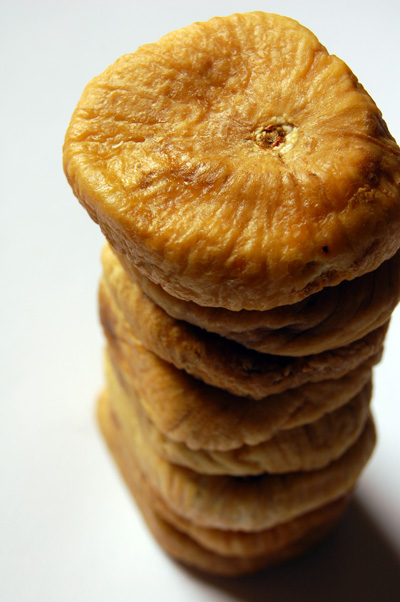
They came in handy today, because on the way home I got dropped plain and simple by a fellow commuter. The excuses I'm talking about are my buttery 1992 carbon Trek 2300 frame, and my 28-wide bullet-proof tires. Other excuses I've gotten rid of one by one. The guy passed me just outside of Amsterdam, near the Nieuwe Diep, I got on his wheel, and together we continued South along the Amsterdam Rijnkanaal. We passed a guy out on a training ride, but he did not get on the train. I was on the wheel for about two miles, working, but not suffering, when we had to go through the little chicane after the river Diem. I dropped back to leave a little room, because you can't really see what's coming from the other side there, but my lead man powered through it so that I came out of the chicane about twenty meters back. I closed the gap, with some difficulty, but the guy had really decided to increase the pressure, and suddenly I was on the limit, a feeling I haven't experienced much on the bike this year. I didn't stay there for very long. It was hard, the legs had not quite recovered from the Sunday ride, and I was beginning to taste again the fig I had put in my mouth when I left work, about six miles back. And then there were the two bike-related excuses. I let him go. He didn't get too far ahead, because up and over the Amsterdam Rijnkanaal bridge, and into and through the city of Weesp I continued to see him ahead of me, the last time as I was entering the Hoogstraat and he was just crossing the bridge across the Vecht river there. He may have been stronger. He certainly looked very good on the bike (a much more recent Trek model with skinny tires), and he had shaved legs (as well as a smaller backpack). But I'm sure that if this had been last week and I had been on the Klein instead, I would have stayed on his wheel happily, maybe even traded a pull or two with him. As it was, he made me go through the kind of experience--the point where you decide to be dropped--I've only experienced behind cars and mopeds this year.
Louis Rosen, R.I.P.
Earlier this month, nuclear scientist Louis Rosen died at the age of 91 in Albuquerque, NM. I knew him a little bit in the mid-1990s during my time at Los Alamos National Laboratory. I was a research assistant at the Center for National Security Studies (dissolved by the lab's leadership immediately following the Gingrich revolution in late 1994), where Rosen was an associate at the time. At CNSS he did policy-related work, but he was also still involved with the lab project that was his primary accomplishment: the huge atom smasher built during the 1960s right along the main access road to the lab, the so-called "truck route." I once interviewed him at his office there for a newspaper piece I was doing on the lab in the post-Cold War era. One of the things Rosen stood out for during my time at the lab was that he was one of the few people left who had come to Los Alamos during World War II to be part of the Manhattan Project. I don't remember much of our interview, but I do remember his account of that cross-country trip. If I can find the time, I'll dig out the tape I made of our conversation.
Sunday, September 13, 2009
More U.S. "snub" to the Poles
Unlike NRC-Handelsblad commentator Juurd Eijsvoogel the other day, the Economist does not believe Washington acted deliberately when it sent a low-level delegation to the World War II commemorations two weeks ago. In its current issue it says the U.S. "botched" this thing. The magazine does believe U.S. - (East)European ties are less close, but there's no talk of an American plan to "encourage" countries such as Poland to develop a more stable relationship with Russia (other than the administration's desire for a "reset" in its own ties with Moscow). Most of this is about Russia: the U.S. (and many other NATO countries) would like to have a more businesslike relationship with Don Putin, one in which Moscow may be willing at times to help advance Western interests in places such as the Persian Gulf or the Korean peninsula. Poland (and also the Baltic states, for instance) want NATO to prepare itself to resist--militarily, if necessary--Russian efforts to regain a sphere of influence in Eastern Europe. You most certainly won't get the former if you do a lot of the latter, but when you're NATO you're also supposed to be an alliance that works for all of its members. Those members, in turn, should of course try to keep a cool head, even when they're next door to a place like Putin's Russia. So what else is new? Discussion, divisions even, in the NATO alliance? These always get worked out one way or another, don't they?
Subscribe to:
Posts (Atom)