Wednesday, November 3, 2010
Use Those Flashers
The Wall Street Journal writes about how difficult it is to get Dutch cyclists to wear helmets, but I'm writing about the cavalier way many of them go out without lights after dark. We went off daylight savings time last weekend, so this week I've started to ride home after dark. You really need your lights by 5:15 now, certainly on a cloudy day. And you're going to need them a lot: six months until spring! I use one headlight (or the other one), and two flashers attached to my seat stays. Most of the riding here is on bikepaths, but even there, and certainly on the little country roads (dikes) drivers often use as short-cuts, you are going to want to stand out like a Christmas tree. Recently, I've added a mount underneath my seat for an additional flasher. In spite of the fact that attaching it (and taking it off when parking the bike at work) adds yet another action to the long string of actions required to get ready for a cold season ride, I'm going to start using this third flasher too. There really is no such thing as overkill when it comes to this, especially if you also realize that if a flasher is positioned incorrectly, the effect can be reduced to almost zero. Also (this is what drivers surely know), one little flasher often barely makes a difference. You could be riding around feeling quite responsible, while in reality you're still a dark ghost that haunts the road. But that's people who care. It is the people who take this too lightly who need to start thinking (the way helmet-less folks need to turn on their brains): forget, for a moment, about the drivers you would be burdening with having hurt or killed a cyclist, forget also about general credibility of cyclists as participants in traffic; if there are people who care about you, people you care about, would you really want them to have to deal with the consequences of a possible tragedy? Bike-related tragedies happen every day, and many in hindsight turn out to have been preventable. The chances of something going wrong are relatively small, but when it does go wrong it can truly be tragic. And what's so hard about getting this right: spending a little bit of money for a few lights, spending a little bit of time to keep them charged, spending just a tiny bit of extra time to attach them to the bike? With these stakes? Gimme a break.


Saturday, October 30, 2010
"The" Obama Effect
That, without the quotation marks, was the name of the conference I participated in this past week. It was held at the Roosevelt Study Center in Middelburg (Dutch province of Zeeland). The purpose of the conference was to look at the past, present, and future of the transatlantic relationship and see if the election of Barack Obama has had an impact on this old but evolving alliance. The organizers had brought in three excellent keynote speakers. On the opening night, NATO head of policy planning, Jamie Shea, gave us a detailed and sophisticated view of the current state of West-West relations. One the one hand, the Obama administration has not awarded a very high priority to the old continent in its foreign policy. See for example the cancellation of Obama's attendance at an EU-U.S. summit earlier this year, or his absence last year from the anniversary ceremonies of the start of World War II in Europe or the fall of the Berlin Wall. On the other hand, his administration has done much to send reassuring messages to Europe's fringes, as in the anxieties in Eastern and Central Europe about Russia, European concerns about the Balkans, and the place of Turkey in Europe. Both sides in the partnership, Shea suggested, need to worry about their own sins of (mostly) omission that threaten the long-term health of the alliance. The U.S. needs to get its financial and economic house in order to stem the spreading sense that it is a great power in decline, less and less able to act effectively around the world. It also would help if U.S. politics was less divisive ("poison politics"). The Europeans, in turn, should think hard about the way they're falling further and further below agreed-upon NATO defense spending targets. Soft power doesn't count for anything in Washington, only hard power gets you credibility. Europe, Shea warned, needs to recognize that the decline of U.S. interest in Europe is real. It would also be nice if "Europe" managed to act a little more in unison in foreign policy, also, or especially, outside the transatlantic relationship. If a multi-polar world is the future, and multilateralism its essential tool, the EU could do a lot more in developing its own ties to rising powers such as India and China.
The second keynote speaker, Scott Lucas, of the University of Birmingham, provided an alternative vision, one he also promotes through his website, EAWorldView. To take one major argument from his talk: Europe should worry much less about whether its policies please Washington. The U.S. would be much better served with an independently acting Europe telling Washington what its interests are. The U.S., meanwhile, should break with its tradition of military interventionism, especially in its struggle against Islamic terror groups, because it is counter-productive. Perhaps the main phrase from Lucas' talk came at the beginning: we (the U.S.-led West) needs to recognize the power of the regional and the local. That is where solutions to large problems can be found, not in Western interventionist capabilities.
The third keynote speaker was Marcel Wissenburg, a political theorist at Nijmegen University, who drew on recent work to discuss the differences between European ("Eastern") and U.S. approaches to environmental issues, especially the failed attempts to get the U.S. to sign on to international climate agreements. It is all about "culture," broadly defined. Americans just won't go for the thing that works so well in the "East," namely international agreements setting clear targets that countries should meet through targeted, government-mandated regulation. Pointing to the success of Governor Schwarzenegger in California and the 2007 Supreme Court ruling in Massachusetts v. EPA (authorizing the EPA to regulate greenhouse gas emissions), Wissenburg argued that the way forward for the U.S. is to go back to basic principles, such as "health" and move toward policy from there. By implication this would probably mean that there's no future for global climate agreements, but given also the attitude of for example China and India (not to mention Europe's own inability to meet agreed-upon targets) we already knew that.
So what is the Obama effect on transatlantic relations? Ties will be more business-like, and Europe will have to pull its own weight a good deal more, both in maintaining the relationship and in developing its own independent role. It would help if ordinary Europeans became a little less obsessed with their own lives and societies and developed a broader view of global affairs and what is required, also in military terms, to keep things from getting out of control. The U.S., meanwhile, should get a hold of itself, its politics, so that it gets back in a position from where it can take some sensible steps to repair the basis for its global power (which we still very much need). However much one might want to criticize the president, the burden to make that happen mostly rests with others; ultimately, it rests with the American people. It would help if more of them actively showed how the current hysteria does not represent them.
The second keynote speaker, Scott Lucas, of the University of Birmingham, provided an alternative vision, one he also promotes through his website, EAWorldView. To take one major argument from his talk: Europe should worry much less about whether its policies please Washington. The U.S. would be much better served with an independently acting Europe telling Washington what its interests are. The U.S., meanwhile, should break with its tradition of military interventionism, especially in its struggle against Islamic terror groups, because it is counter-productive. Perhaps the main phrase from Lucas' talk came at the beginning: we (the U.S.-led West) needs to recognize the power of the regional and the local. That is where solutions to large problems can be found, not in Western interventionist capabilities.
The third keynote speaker was Marcel Wissenburg, a political theorist at Nijmegen University, who drew on recent work to discuss the differences between European ("Eastern") and U.S. approaches to environmental issues, especially the failed attempts to get the U.S. to sign on to international climate agreements. It is all about "culture," broadly defined. Americans just won't go for the thing that works so well in the "East," namely international agreements setting clear targets that countries should meet through targeted, government-mandated regulation. Pointing to the success of Governor Schwarzenegger in California and the 2007 Supreme Court ruling in Massachusetts v. EPA (authorizing the EPA to regulate greenhouse gas emissions), Wissenburg argued that the way forward for the U.S. is to go back to basic principles, such as "health" and move toward policy from there. By implication this would probably mean that there's no future for global climate agreements, but given also the attitude of for example China and India (not to mention Europe's own inability to meet agreed-upon targets) we already knew that.
So what is the Obama effect on transatlantic relations? Ties will be more business-like, and Europe will have to pull its own weight a good deal more, both in maintaining the relationship and in developing its own independent role. It would help if ordinary Europeans became a little less obsessed with their own lives and societies and developed a broader view of global affairs and what is required, also in military terms, to keep things from getting out of control. The U.S., meanwhile, should get a hold of itself, its politics, so that it gets back in a position from where it can take some sensible steps to repair the basis for its global power (which we still very much need). However much one might want to criticize the president, the burden to make that happen mostly rests with others; ultimately, it rests with the American people. It would help if more of them actively showed how the current hysteria does not represent them.
Thursday, October 14, 2010
Catch-Up Posting
There were a couple of moments the past two weeks when I had reason to post, but you do have to take the time, and I didn't (that's a better explanation than: "no time," because "no time" really means "no priority"). I really do believe I usually had better, or at least more pressing things to do. And I'm afraid that includes taking advantage of the very nice fall weather last Saturday for one more team ride in shorts and short sleeves (Portengensebrug, Harmelen, Montfoort, Oudewater, Haastrecht, Reeuwijk/Gouda, Bodegraven, Woerden, Kanis, Breukelen for a total of 67 miles).
But I did do an-op ed two weeks ago arguing that the Dutch parliament should consider sending police and military trainers to Afghanistan because we're entering a crucial phase of the struggle there, given President Obama's time table. There are other signs that things remain in flux and that Western interests are at stake: the terror plot responsible for the increased number of U.S. drone attacks in the border area with Pakistan; discussions between certain Taliban and the Karzai government; military stalemate. I went out on a limb and said that the situation is not hopeless, and that in any case muddling through is preferable to total chaos there. Of course, one of the big ifs for a turn for the better in the region--Pakistan's cooperation in this campaign--has appeared even more problematic since I submitted my piece, thanks to Lahore's closure of the Khyber Pass supply route and the subsequent attacks on Western convoys. A classic case of a weak but indispensable ally having plenty of options not only to squeeze lots of money out of you, but also of jerking you around at will. Still, if the Dutch care about their own security, about continuing the good work they've done in Afghanistan since 2006, and about a successful Obama presidency, they should send the trainers. It is true that Western military presence, "occupation," is a prime motivator for extremists, but now that we're there, it matters how we leave. This summer, the Dutch left Afghanistan in a lousy way; the least they can do is try to pitch in during what promises to be a crucial stage of the Afghanistan saga.
Then there was news to report on the "weird cycling contraptions" front. Last time, I reported on being passed by a regular-looking guy in street clothes on a hybrid kind-of bike, making me look like a big slouch (even though I was riding to work at probably 18-19 m/h on my old Trek, wearing an old team kit, and carrying a back-pack). Had to be an electric bike. I resolved next time to jump on the wheel, even though it would look funny. Well, this week I've had two opportunities. Leaving Amsterdam last Monday there was somebody behind me who, out on the open road by the Amsterdam Rijnkanaal actually came around. Hybrid bike, one saddle bag, backpack, but also dressed in cycling clothes he just went a little too fast given his appearance. Again, a very strong rider (would probably have to be some kind of racer) could move a bike like that at that speed, but they're few and far between, and if they were that kind of rider, they would not be riding to work like that. Of course, the moment he passed me I could see his battery back hanging off the seat tube. He turned out to be going my way for almost ten miles, and for most of that distance I had nice, quiet, and clean pacemaker at a speed somewhere in the low 20s. Just before we went our separate ways I pulled up alongside and asked if he had indeed some electrical assistance. He did. Keeping up wasn't difficult at all, but in Muiden, crossing the big bridge in the center, he ran the light, while I stopped and pressed the button to get the green. Green came quickly, but meanwhile he'd gotten about a 100m gap. It did take some effort to close that again, and it must have looked weird: this "real"cyclist digging deep to get on the wheel of this upright hybrid rider. Yesterday morning I had to make a similar effort to get on the wheel of what may well have been the same guy as the one who prompted my post two weeks ago. The sight of us riding together must have been even weirder. On the way in, riding the nice wide and empty two mile stretch of asphalt near IJburg (visible here toward the left, alongside the green part) suddenly he blew by me again: hybrid bike, street clothes, upright position. It took me a second or two to make up my mind, but then I decided to take a closer look. This was hard, as by then he'd taken a 50m lead. But I got on the wheel, and before the Nescio bridge, my turn off, I was also able to confirm that his bike was a Trek. I didn't get to talk to this guy, but I'm convinced that he too had his electrical device turned on, in part because there was the same, very slight whirring sound you don't hear on regular bikes. But even more important was that this picture really didn't fit. Cyclists looking this way just don't go at these speeds. There's an artist--I'll get the name and a link when I get home tonight--who has these human figures that quickly make you do a double-take because something isn't right. On closer inspection you see that one of several body parts are just a little too big, or small. Watching these guys on their electric bikes come by is a similarly disorienting experience. However, once you're on their wheel, they provide very nice drafting opportunities.
But I did do an-op ed two weeks ago arguing that the Dutch parliament should consider sending police and military trainers to Afghanistan because we're entering a crucial phase of the struggle there, given President Obama's time table. There are other signs that things remain in flux and that Western interests are at stake: the terror plot responsible for the increased number of U.S. drone attacks in the border area with Pakistan; discussions between certain Taliban and the Karzai government; military stalemate. I went out on a limb and said that the situation is not hopeless, and that in any case muddling through is preferable to total chaos there. Of course, one of the big ifs for a turn for the better in the region--Pakistan's cooperation in this campaign--has appeared even more problematic since I submitted my piece, thanks to Lahore's closure of the Khyber Pass supply route and the subsequent attacks on Western convoys. A classic case of a weak but indispensable ally having plenty of options not only to squeeze lots of money out of you, but also of jerking you around at will. Still, if the Dutch care about their own security, about continuing the good work they've done in Afghanistan since 2006, and about a successful Obama presidency, they should send the trainers. It is true that Western military presence, "occupation," is a prime motivator for extremists, but now that we're there, it matters how we leave. This summer, the Dutch left Afghanistan in a lousy way; the least they can do is try to pitch in during what promises to be a crucial stage of the Afghanistan saga.
Then there was news to report on the "weird cycling contraptions" front. Last time, I reported on being passed by a regular-looking guy in street clothes on a hybrid kind-of bike, making me look like a big slouch (even though I was riding to work at probably 18-19 m/h on my old Trek, wearing an old team kit, and carrying a back-pack). Had to be an electric bike. I resolved next time to jump on the wheel, even though it would look funny. Well, this week I've had two opportunities. Leaving Amsterdam last Monday there was somebody behind me who, out on the open road by the Amsterdam Rijnkanaal actually came around. Hybrid bike, one saddle bag, backpack, but also dressed in cycling clothes he just went a little too fast given his appearance. Again, a very strong rider (would probably have to be some kind of racer) could move a bike like that at that speed, but they're few and far between, and if they were that kind of rider, they would not be riding to work like that. Of course, the moment he passed me I could see his battery back hanging off the seat tube. He turned out to be going my way for almost ten miles, and for most of that distance I had nice, quiet, and clean pacemaker at a speed somewhere in the low 20s. Just before we went our separate ways I pulled up alongside and asked if he had indeed some electrical assistance. He did. Keeping up wasn't difficult at all, but in Muiden, crossing the big bridge in the center, he ran the light, while I stopped and pressed the button to get the green. Green came quickly, but meanwhile he'd gotten about a 100m gap. It did take some effort to close that again, and it must have looked weird: this "real"cyclist digging deep to get on the wheel of this upright hybrid rider. Yesterday morning I had to make a similar effort to get on the wheel of what may well have been the same guy as the one who prompted my post two weeks ago. The sight of us riding together must have been even weirder. On the way in, riding the nice wide and empty two mile stretch of asphalt near IJburg (visible here toward the left, alongside the green part) suddenly he blew by me again: hybrid bike, street clothes, upright position. It took me a second or two to make up my mind, but then I decided to take a closer look. This was hard, as by then he'd taken a 50m lead. But I got on the wheel, and before the Nescio bridge, my turn off, I was also able to confirm that his bike was a Trek. I didn't get to talk to this guy, but I'm convinced that he too had his electrical device turned on, in part because there was the same, very slight whirring sound you don't hear on regular bikes. But even more important was that this picture really didn't fit. Cyclists looking this way just don't go at these speeds. There's an artist--I'll get the name and a link when I get home tonight--who has these human figures that quickly make you do a double-take because something isn't right. On closer inspection you see that one of several body parts are just a little too big, or small. Watching these guys on their electric bikes come by is a similarly disorienting experience. However, once you're on their wheel, they provide very nice drafting opportunities.
Wednesday, September 22, 2010
The Proliferation of Weird Cycling Contraptions
A weird experience this morning, riding out of the town of Muiden on my way to work. It was a beautiful morning with virtually no wind, some very light fog here and there, and temperatures that were already very mild. I was moving along just fine in a short sleeve jersey and a vest. Shorts, obviously. I never go hard in the morning; it just doesn't feel right, shortly after getting out of bed and with the whole work day still ahead of you. Still, I think I was doing 18-19 m/h, happily spinning a 39x16 gear when some guy riding a kind of hybrid bike blew by me at maybe 25 m/h. It was the weirdest thing: he was wearing street clothes, sitting pretty straight up, and you could see that his tires weren't the skinniest around. He was pushing, but the elements in the picture just did not fit together. I mean, there are probably people (guys my age or older, like this guy) who could come up with the kind of power to move a bike like that at this speed, but they're very few and far between, and they probably would not be riding to work that way in street clothes. The ensemble did make a considerable amount of noise, which I first attributed to the fat tires. But then I thought: Cancellara!, as in: electric motor! (Sorry man!) And after a brief Google image search I think I've figured out what we had there, this morning. It's the Trek Ride +, or something like it. First I had to get used to these cigar-type vehicles people here use to "ride" to work, and now this. At least in the case of the electric bike you can choose to draft off it, the way you would with a moped or scooter. Come to think of it, it's really good for that because there are no fumes. It will look weird, but just in case he passes me again on the way home, I think I'll jump on his wheel.
Monday, September 20, 2010
Others on Other American Scares and Today
I'm far from the only one who has been reminded of other American scares amid the anti-Muslim and anti-immigrant furor these days. See, for example, George Packer at the New Yorker, who likens today's general public agitation to 1919-1920. The political debate does seem a little unhinged today, if you think about it. Focusing on the intersection of isolationism and war, Peter Beinart sees similarities with both 20th century Red Scares--and there's something to that also. Juan Cole, meanwhile, emphasizes the nativist angle and goes back even futher in U.S. history. Before I get more angry e-mails from people I don't know: I don't necessarily agree with all of these analyses and believe even less that these analogies prove that the U.S. is a rotten country--not free, not essentially tolerant. Least of all do I hate America. I don't have a passport, but put me with those American patriots anyway who get worked up during these "scares" because to them the behavior and ideas on display actually subvert important American ideals. But I'm a historian and happen to believe (call me crazy) that it's helpful to have a historical perspective on things. It can help you see similarities (today's developments as part of larger themes or trends throughout U.S. history) as well as differences. When I teach my "American Scares" seminar again, you can sign up and we'll take a close up look.
Wednesday, September 8, 2010
Playing with Fire
I just saw another version of my op-ed on the current anti-Muslim scare in the United States. It's in de Gelderlander (in Dutch), and there's one reader comment arguing that this is actually driven by the "authorities" to justify further military involvement in the Middle East and Central Asia. That I don't believe. Not even the Bush administration believed there was anything to be gained by stigmatizing an entire group (Muslims) exactly at a time when it is of vital importance to convince members of the same group all over the world that your policies are aimed at small groups of extremists and that the last thing you or anybody else needs is a global religious war. Of course U.S. policy has displayed plenty of screw-ups (and worse: "Abu Ghraib," "Guantanamo"), and of course the Bush administration cynically employed "9/11" to maintain support for its foreign and domestic policies. But that's still very different from deliberately implicating all Muslims, everywhere, in the crimes of a fanactic minority. The current scare is not spontaneous--specific individuals in the U.S. and elsewhere speak with reckless irresponsibility about Muslims, often unhindered by any real knowledge or direct experience. (I do agree with the commenter that the media often seem all too happy to repeat or abet a lot of the garbage being uttered). But, as witness yesterday's comments by Attorney-General Holder and Secretary of State Clinton, and earlier warnings by General Petraeus, the U.S. government understands full well how we're playing with fire here. To repeat: this intolerance is not just profoundly un-American (this would be bad enough), it can also fatally undermine the efforts by the U.S. and others to build some common ground between the West and the Muslim world. As anger about illegal immigration and Latino immigrants also shows (even though the numbers are actually down), these are anxious times. Absolutely no need to fan the flames. But Western societies have their share of fanatics too, not to mention cynically opportunistic politicians and "opinion leaders."
Monday, September 6, 2010
Fast Women, Beautiful Roads, and Pastry
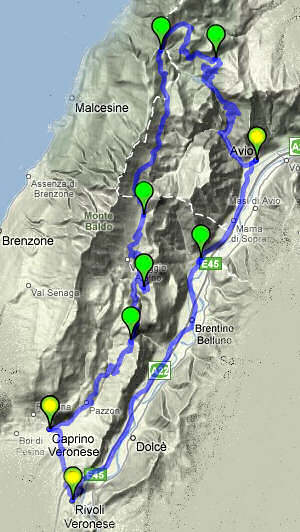
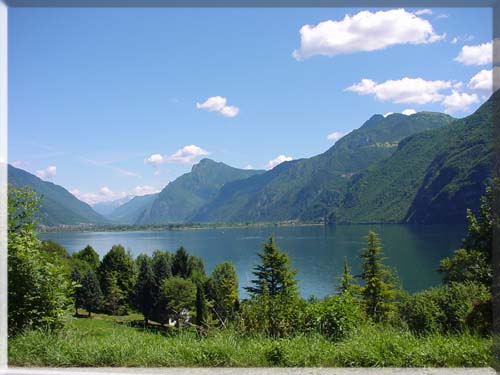
In Los Alamos in the mid-1990s there was Jennifer, who had no trouble riding with us boys, and whom I could only drop on the climb to the Valle Grande, out of the back gate. On the flats, she'd be more likely to kick my behind. She wasn't around all the time, because she raced most of the national races with the top women in the U.S., for example the week-long Cascade Classic stage race. In Milwaukee, there was Patti, a two-time national champion, who had also raced the Cascade Classic and who on the flat training rides gave as good as she got (while many others were happy just to be passengers) and who always got better as the rides got longer. She, too, would fall behind on the climbs, but both are good examples of lone women holding their own in groups full of guys. The fact that in more than 20 years of group rides, I can only remember a handful of these women also shows how rare they still are. Then two weeks ago, on the Cote de la Redoute, there was the Flemish girl, and last week there was Erica from Valgatara, Valpolicella, the town with the killer gelato. I had trouble keeping up with the former, and over in the Lake Garda area it was no different with the latter. It's not a real surprise, as Erica's time (last May, with snow coming down) on Mt. Ventoux is almost five minutes faster than mine. She has also finished first in several Granfondo races. I got to ride with Erica thanks to an invitation from my friend Michele, who had gotten to know her on the Ventoux expedition and whose riding has taken flight since he started training with her. Last Tuesday we all met near Fumane, outside of Verona. We climbed to Molina, then on to Breonio. The climb to Molina is a good one: pretty challenging, though not too long. Erica fell a little behind, but I don't think she was really trying. That was the thing on every climb: she just rode up, riding smoothly and light-footed, and she wasn't pushing the smallest gears around. The rest of the ride was a friendly up-and-down, eventually back to Valgatara, but you could not help wondering what it would be like to hang on to her wheel on a long, tough climb when the chips are down. It would be relentless, and it would be painful. The trip to Verona-Lake Garda area was a final chance for a few days of scenic, summer riding, and I think I made the most of it. At the end of the ride with Erica, Michele made me ride home to our perch overlooking the lake while he took the car back, which meant doing the Caprino-Lumini climb with 60 miles of up-and-down in my legs in temperatures not seen in Holland in a while. So that first day was a good opening day. The next day, it was just Michele and I, but only to the little town of Spiazzi. We did a good climb on a little back road through Porcino, but then I was on my own, Michele saving himself for the next day. I rode on, behind the tall ridge overlooking Lake Garda, to Cavallo di Novezza, and eventually to the foot of Monte Altissimo. There was enough climbing on that section, including a mile at 19% coming right after a few kilometers of something around 10%. Then there was a long downhill (ten miles or so), all the way to Avio, which is on the Brenner highway. I paralleled that back to Caprino, for a reunion with the climb to Lumini. 65 miles (more or less this route, clock-wise) and it felt like work. Day three saw us reunited with Erica at the ferry across Lake Garda to start our ride of the three lakes: Lago di Valvestino, Lago d'Idro, and Lago di Ledro. Getting off the ferry, we first stopped for cappucchino and cake, then rode a whole bunch of gorgeous roads, to get back to Lake Garda at its northern tip at Riva di Garda (except for that steep downhill on a gravel trail, bypassing the main road into town--an Oscar Swan ghost road if there ever was one. With her mountainbike background, Erica quickly left us far behind there). The last hour, to show that I really live in flat, windy Holland, I dragged the three of us back in one 35k-long pull along the lake to Torri del Benaco. Because I am from Holland and don't get to climb much, I also got to do the 10k climb home to San Zeno by way of Albisano, while the other two got into the car. The long pull had taken it out of me, so even though I was just five miles from getting a century, I was happy to make the turn into the driveway. Happiness remained, also for Michele, to make us choose a 25k coffee ride for the final day: down the hill to Caprino, a three-pastry stop (hazelnut; rice pudding, whipped cream), then back home over the old Caprino-Lumini climb. Perfect, as with everything on this far too short outing.
Subscribe to:
Posts (Atom)