Wednesday, September 22, 2010
The Proliferation of Weird Cycling Contraptions
A weird experience this morning, riding out of the town of Muiden on my way to work. It was a beautiful morning with virtually no wind, some very light fog here and there, and temperatures that were already very mild. I was moving along just fine in a short sleeve jersey and a vest. Shorts, obviously. I never go hard in the morning; it just doesn't feel right, shortly after getting out of bed and with the whole work day still ahead of you. Still, I think I was doing 18-19 m/h, happily spinning a 39x16 gear when some guy riding a kind of hybrid bike blew by me at maybe 25 m/h. It was the weirdest thing: he was wearing street clothes, sitting pretty straight up, and you could see that his tires weren't the skinniest around. He was pushing, but the elements in the picture just did not fit together. I mean, there are probably people (guys my age or older, like this guy) who could come up with the kind of power to move a bike like that at this speed, but they're very few and far between, and they probably would not be riding to work that way in street clothes. The ensemble did make a considerable amount of noise, which I first attributed to the fat tires. But then I thought: Cancellara!, as in: electric motor! (Sorry man!) And after a brief Google image search I think I've figured out what we had there, this morning. It's the Trek Ride +, or something like it. First I had to get used to these cigar-type vehicles people here use to "ride" to work, and now this. At least in the case of the electric bike you can choose to draft off it, the way you would with a moped or scooter. Come to think of it, it's really good for that because there are no fumes. It will look weird, but just in case he passes me again on the way home, I think I'll jump on his wheel.


Monday, September 20, 2010
Others on Other American Scares and Today
I'm far from the only one who has been reminded of other American scares amid the anti-Muslim and anti-immigrant furor these days. See, for example, George Packer at the New Yorker, who likens today's general public agitation to 1919-1920. The political debate does seem a little unhinged today, if you think about it. Focusing on the intersection of isolationism and war, Peter Beinart sees similarities with both 20th century Red Scares--and there's something to that also. Juan Cole, meanwhile, emphasizes the nativist angle and goes back even futher in U.S. history. Before I get more angry e-mails from people I don't know: I don't necessarily agree with all of these analyses and believe even less that these analogies prove that the U.S. is a rotten country--not free, not essentially tolerant. Least of all do I hate America. I don't have a passport, but put me with those American patriots anyway who get worked up during these "scares" because to them the behavior and ideas on display actually subvert important American ideals. But I'm a historian and happen to believe (call me crazy) that it's helpful to have a historical perspective on things. It can help you see similarities (today's developments as part of larger themes or trends throughout U.S. history) as well as differences. When I teach my "American Scares" seminar again, you can sign up and we'll take a close up look.
Wednesday, September 8, 2010
Playing with Fire
I just saw another version of my op-ed on the current anti-Muslim scare in the United States. It's in de Gelderlander (in Dutch), and there's one reader comment arguing that this is actually driven by the "authorities" to justify further military involvement in the Middle East and Central Asia. That I don't believe. Not even the Bush administration believed there was anything to be gained by stigmatizing an entire group (Muslims) exactly at a time when it is of vital importance to convince members of the same group all over the world that your policies are aimed at small groups of extremists and that the last thing you or anybody else needs is a global religious war. Of course U.S. policy has displayed plenty of screw-ups (and worse: "Abu Ghraib," "Guantanamo"), and of course the Bush administration cynically employed "9/11" to maintain support for its foreign and domestic policies. But that's still very different from deliberately implicating all Muslims, everywhere, in the crimes of a fanactic minority. The current scare is not spontaneous--specific individuals in the U.S. and elsewhere speak with reckless irresponsibility about Muslims, often unhindered by any real knowledge or direct experience. (I do agree with the commenter that the media often seem all too happy to repeat or abet a lot of the garbage being uttered). But, as witness yesterday's comments by Attorney-General Holder and Secretary of State Clinton, and earlier warnings by General Petraeus, the U.S. government understands full well how we're playing with fire here. To repeat: this intolerance is not just profoundly un-American (this would be bad enough), it can also fatally undermine the efforts by the U.S. and others to build some common ground between the West and the Muslim world. As anger about illegal immigration and Latino immigrants also shows (even though the numbers are actually down), these are anxious times. Absolutely no need to fan the flames. But Western societies have their share of fanatics too, not to mention cynically opportunistic politicians and "opinion leaders."
Monday, September 6, 2010
Fast Women, Beautiful Roads, and Pastry
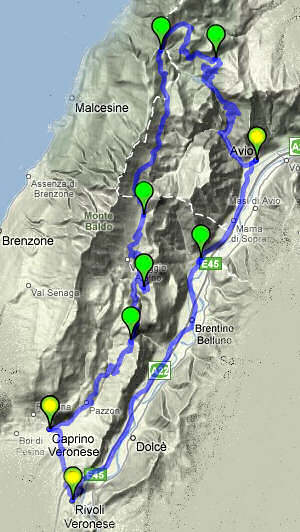
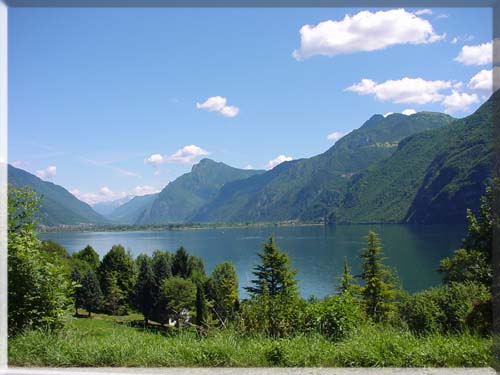
In Los Alamos in the mid-1990s there was Jennifer, who had no trouble riding with us boys, and whom I could only drop on the climb to the Valle Grande, out of the back gate. On the flats, she'd be more likely to kick my behind. She wasn't around all the time, because she raced most of the national races with the top women in the U.S., for example the week-long Cascade Classic stage race. In Milwaukee, there was Patti, a two-time national champion, who had also raced the Cascade Classic and who on the flat training rides gave as good as she got (while many others were happy just to be passengers) and who always got better as the rides got longer. She, too, would fall behind on the climbs, but both are good examples of lone women holding their own in groups full of guys. The fact that in more than 20 years of group rides, I can only remember a handful of these women also shows how rare they still are. Then two weeks ago, on the Cote de la Redoute, there was the Flemish girl, and last week there was Erica from Valgatara, Valpolicella, the town with the killer gelato. I had trouble keeping up with the former, and over in the Lake Garda area it was no different with the latter. It's not a real surprise, as Erica's time (last May, with snow coming down) on Mt. Ventoux is almost five minutes faster than mine. She has also finished first in several Granfondo races. I got to ride with Erica thanks to an invitation from my friend Michele, who had gotten to know her on the Ventoux expedition and whose riding has taken flight since he started training with her. Last Tuesday we all met near Fumane, outside of Verona. We climbed to Molina, then on to Breonio. The climb to Molina is a good one: pretty challenging, though not too long. Erica fell a little behind, but I don't think she was really trying. That was the thing on every climb: she just rode up, riding smoothly and light-footed, and she wasn't pushing the smallest gears around. The rest of the ride was a friendly up-and-down, eventually back to Valgatara, but you could not help wondering what it would be like to hang on to her wheel on a long, tough climb when the chips are down. It would be relentless, and it would be painful. The trip to Verona-Lake Garda area was a final chance for a few days of scenic, summer riding, and I think I made the most of it. At the end of the ride with Erica, Michele made me ride home to our perch overlooking the lake while he took the car back, which meant doing the Caprino-Lumini climb with 60 miles of up-and-down in my legs in temperatures not seen in Holland in a while. So that first day was a good opening day. The next day, it was just Michele and I, but only to the little town of Spiazzi. We did a good climb on a little back road through Porcino, but then I was on my own, Michele saving himself for the next day. I rode on, behind the tall ridge overlooking Lake Garda, to Cavallo di Novezza, and eventually to the foot of Monte Altissimo. There was enough climbing on that section, including a mile at 19% coming right after a few kilometers of something around 10%. Then there was a long downhill (ten miles or so), all the way to Avio, which is on the Brenner highway. I paralleled that back to Caprino, for a reunion with the climb to Lumini. 65 miles (more or less this route, clock-wise) and it felt like work. Day three saw us reunited with Erica at the ferry across Lake Garda to start our ride of the three lakes: Lago di Valvestino, Lago d'Idro, and Lago di Ledro. Getting off the ferry, we first stopped for cappucchino and cake, then rode a whole bunch of gorgeous roads, to get back to Lake Garda at its northern tip at Riva di Garda (except for that steep downhill on a gravel trail, bypassing the main road into town--an Oscar Swan ghost road if there ever was one. With her mountainbike background, Erica quickly left us far behind there). The last hour, to show that I really live in flat, windy Holland, I dragged the three of us back in one 35k-long pull along the lake to Torri del Benaco. Because I am from Holland and don't get to climb much, I also got to do the 10k climb home to San Zeno by way of Albisano, while the other two got into the car. The long pull had taken it out of me, so even though I was just five miles from getting a century, I was happy to make the turn into the driveway. Happiness remained, also for Michele, to make us choose a 25k coffee ride for the final day: down the hill to Caprino, a three-pastry stop (hazelnut; rice pudding, whipped cream), then back home over the old Caprino-Lumini climb. Perfect, as with everything on this far too short outing.
Saturday, September 4, 2010
A New American Scare
That, unfortunately, is the thesis of an op-ed I did last week on what to me appears a sudden escalation in anti-Muslim rhetoric and activity in the United States. You can read a version (in Dutch) over on the website of the Nederlands Dagblad. An inaccuracy or two has slipped through the cracks (for example a mention of the CIA as an institution instrumental in fueling earlier "scares"--I meant the Supreme Court, as in its sanctioning of Japanese-American internment during World War II), but they're minor. In the article I argue that the current anti-Muslim campaign resembles the Red Scares of the 20th century, and also the one driving Japanese-American internment 1942-1945, in that in a tough situation, where the country has suffered set-backs in its relationship with the outside world, certain forces (Justice Department, FBI, certain politicians, media organizations) cause many people to hold a certain group as either responsible for the problem, dangerous, or both. The result is a combination of official action (deportation of anarchist Russian immigrants; locking up citizens of Japanese descent) and free-lancing by individual Americans (anti-mosque activities today). For a long time after 9/11, Americans resisted the temptation to blame any Muslim, anywhere for the actions of a fanatic few. At least, at home they did. Overseas, Abu Ghraib and "Guantanamo" made for a much more complicated picture. But now at home things seem to be getting out of hand too. Earlier "scares" eventually passed, but not without severe damage to individual lives and the thing America really ought to be about, namely living up to its own best ideals. Is this a full-blow witch hunt yet? Maybe not. But it's headed that way, in part because a lot of influential individuals and organizations are acting more than a little irresponsibly. The "Ground Zero Mosque" is more a catalyst than the actual issue. Given the impact of 9/11 and other terrorist acts, we've been in a precarious situation for a while now. Add to that the crisis, and you end up with a lot of people, as there are today, that believe the country is on the wrong track. In such times, it doesn't take too much for things to turn ugly. The planned Islamic cultural center downtown Manhattan is clearly a sensitive issue for many. Even more reason for media organizations and prominent politicians to discuss it rationally and dispassionately. But that seems to be the opposite of what we're seeing right now.
Monday, August 23, 2010
90 Miles and Feeling a Little Old
I have things to say, and ask, about the latest American scare (the "Ground Zero Mosque"), but let me first report on last Saturday, when I did 90 challenging miles in the Ardennes as part of the "Geants des Ardennes". That's geant as in: giant. With four of my Eendracht friends I did the 143K route, which included 15 named climbs. It was my first day in the Eendracht kit (approved, upon my return, by the home front), as it was my first time with the new team in hilly terrain. The last time I had done this kind of distance was in 2007 (the year of my last century), when I'd often get rides over 70 miles long, do hard training rides on a weekly basis, and actually race. Most of that has gone by the wayside, and I think it showed last weekend. It was a warm day, weather I used to thrive in. But two-thirds of the way in cramps started bothering me. I was able to get rid of them by getting out of the saddle (hamstring) or staying seated (quadriceps), and considered myself lucky that front and back never acted up simultaneously. It wasn't horrible, far from it, but after the half-way mark I basically found myself just riding trying to finish this thing comfortably. In the old days, when I was much further from that dreaded milestone birthday than today, I'd get better as these kind of days went on and would only allow people to pass me (especially on the climbs) if they looked like semi-pros. On the last climb Saturday, there were several people riding away from me, and I was just fine with that. How bad was it? Not very, really. I held my own just fine against my new teammates, and then some, and was having a hard time on only three of the fifteen climbs, but there it was the same for just about everybody. We're talking here about the Cote de Somagne (new to me), the Wanneranval (I had been on this hill, but not from this side), and the Cote La Roche aux Faulcons, the very last one (these days also part of Liege-Bastogne-Liege). They were hard work, at least on the 39x26 they were, but at the same time I never wished I had brought a 28. On the other twelve, I just had a blast riding uphill again for a change. I should also mention this young Flemish woman, dressed all in white, who easily held her own with us on the Cote de la Redoute-Est. She actually rode away from me (passing everyone else around) when I had a cramp setting in. Not that no woman should be able to hang with me on a tough climb, it's just that I've rarely had the experience. I caught up with her at the top, and we rode into Sprimont together. It gave me time to realize that she was easily young enough to be my daughter. I told you this post was about me feeling a little old.
Sunday, August 15, 2010
Cold War Research and Cycling
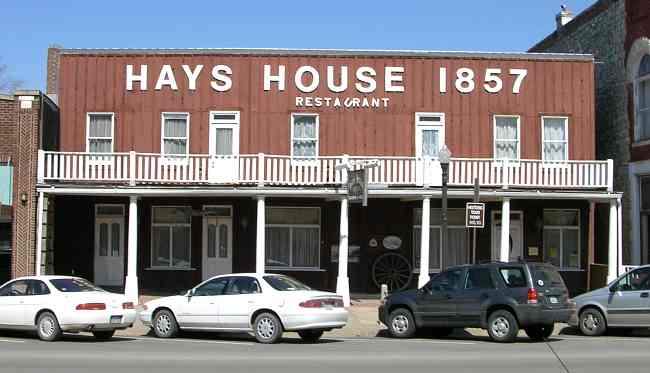
The two can go together. Three examples. When I did research for my dissertation, in Berlin in 1996, I rode a rented bike to the archive in Lichterfelde, first from Kreuzberg, where I was staying with friends, later from Spandau. The latter rides were near epic: January in Berlin, and I was on the road around 7:30, riding part of the way through the woods, getting some breakfast 45 minutes in, at a bakery in Zehlendorf (where I'd also pick up some rolls for when I'd get my lunch-time pea soup at the Freie Universitaet, a ten minute ride from the archive). After lunch, you'd look out the window around 2:30 and see it beginning to get dark again. And so the ride "home" to Spandau (cheap room, though!) was also in the dark. In case you wonder, it certainly was cold on those rides. A few years later I worked on a project for which the material was at the U.S. National Archives at College Park, Md. That's only a stone's throw away from Greenbelt Park, where they have training races every Wednesday night. This, conveniently, is also the day the archive closes at five. So on those research trips (during the summer!) I'd drive over from Milwaukee (including stops in Pittsburgh on the way out and back to join PMVC on their weekend rides) with my bike in the trunk. Then, while in D.C., I'd drive over to Greenbelt Park once or twice during the week either to race or to do an hour of loops around the course by myself. The races were the best, of course, but after sitting on your butt the entire day working your way through box after box it wasn't exactly a chore to ride there all alone. The third example comes from last week, when we drove to Bonn so that I could do some work at the Archiv der sozialen Demokratie at the Friedrich Ebert Stiftung. We found a hotel at the foot of the Venusberg (it says "berg," but it's really just a good hill). On the map, there were two roads that looked like good vehicles for an hour to an hour-and-a-half of exercise after a day spent with the files: the Bergstrasse and the Annaberger Strasse. I did them both, and can report that in Pittsburgh, the former would be a candidate for both Danny Chew's Dirty Dozen and Oscar Swan's ever growing list of ghost roads (a pretty steep grade, enough to give my arms a real work-out on the 39x26 while the poor surface forced me to stay seated). The latter proved to be excellent for hill repeats. It is a beautiful road through the woods that is closed to regular car traffic, and it too is quite steep, especially the first part, steep enough for me to reach for my 24 there. The climb is just about a mile long, and if I did my best, I could do it within six minutes. You do that several times in a row, and you really can get a worthwhile workout in a little over one hour. I was going to write next about the interesting stuff I found in all these archives, but I just remember yet another example of Cold War research-related cycling: Abilene, Kansas. Yes sir! Actually, when I spent two weeks there at the Eisenhower Library in the early '90s (1992, I think, staying at the long since disappeared Forester Hotel for under $35.-- a week, across the tracks from the also sorely missed Texas Cafe), I did have to get in the car for the two excellent rides I remember doing there, but it was worth it. On the advice of a friend over in Lawrence, I drove over on a Saturday afternoon to the Tuttle Creek Lake area, the site of a recent state road championship. They were indeed good roads, but what I remember most is just staying clear of a huge charging St. Bernard dog early in my ride on Green Randolph Rd. near Olsburg. (If that section had been uphill, I don't know if I'd be writing this today). The other drive was in the opposite direction, south into the Flint Hills to Council Grove. I had picked this course myself, having once done a race from the Prairie Chicken Capital of the World (Cassoday, but you probably knew that) to this historic town. The road between there and Strong City/Cottonwood Falls may well be my favorite in all of Kansas, and it was no chore at all to do an out-and-back there. The follow-up research for last week's work may well have to take place at Germany's Bundesarchiv in Koblenz, not a bad place for post-research riding, either. I'll keep you posted.
Subscribe to:
Posts (Atom)