Monday, January 18, 2010
Wear That Helmet
I had been looking for news updates on the crash by Matthias Kessler, the former Telekom and Astana pro trying to make a come-back after a two-year suspension for doping. He hit his head hard after a cat jumped out in front of him during a training ride on Majorca, fracturing his skull. Kessler is also known for his spectacular crash in the Tour a couple of years back, but he does not seem to have learned much, because it turns out he was not wearing a helmet last week. What are the chances, right? And how much can a helmet really do in such situations? The brain that cannot figure out these questions, can't see the point of a helmet, probably isn't worth the investment. One wishes, though, that a brain so indifferent to its own well-being would understand the stakes for family and friends. Just in case? Pretty please??


Tuesday, January 12, 2010
2009 numbers
There was one more ride on New Year's Eve day, and it just pushed me over the 6900 mile limit for the year. I ended up with 6921 miles, almost half of which came from my commutes to Amsterdam and back. I did 98 of those rides last year, at 32, 34, or 36 miles a piece (depending on the route). I did no races, and fast rides overall have been much less prominent since moving to Holland. I've still wanted to go hard, on Mt. Ventoux back in July, for example, but it has been difficult to achieve the required intensity. The obvious solution is to go harder on the commutes. I'm never very ambitious on the way into the city, but there should be room for a few intervals on the way home. Before I could make much of this new year's resolution last week, we got treated to lake ice here (as well as more snow), so for the time being I'm working on skaters' legs (the ones that don't move well on the bike). This is not such a bad thing, as (speed)skating is weight-bearing activity that helps build power. Just as important is that it's a lot of fun to be out there with everyone else on the frozen lakes and canals. Can't count these miles, but there will be plenty of miles this coming year that do qualify.
Wednesday, January 6, 2010
Connecting The Dots
Of course the past decade, if it indeed ended last week instead of a year from now, was the 9/11 decade. I just read a longish piece in the New Yorker where the author was trying to decide if the years since 2000 can be called anything (it came out in late December, but we get our New Yorker even later here in Holland than we used to get it in Milwaukee). One of the major lessons we were supposed to have learned from the attacks on 9/11 is that the various parts of the government charged with keeping the country safe need to share information about possible threats more readily and efficiently. This was why, as a result of the report of the 9/11 Commission, there came a new intelligence czar, at the expense of the influence--supposedly--of the director of the CIA, though maybe not of that of the director of the FBI. And it's why there emerged a new Department of Homeland Security, and a terrorism czar. And what are we forced to conclude in the wake of the failed bombing of the Northwest flight on Christmas Day? Responsible government agencies, individually in possession of all the information required, failed to connect the dots that should have kept Umar Farouk Abdulmutallab off that flight to Detroit. Today there's a op-ed in the New York Times by Thomas H. Kean and John Farmer Jr., respectively, the co-chairman and senior counsel of the 9/11 Commission, that makes for depressing reading. We don't seem to have come very far since July of 2004, when the Commission released its report, as witness the following section of the op-ed:
Despite the best efforts of the 9/11 commission and other intelligence reformers, budgetary authority over intelligence remains unaligned with substantive responsibility. Turf battles persist among intelligence agencies. Power is sought while responsibility is deflected. The drift toward inertia continues.Elsewhere in the piece the authors warn against descending into a political blame game, and it's probably right to avoid blaming the Bush administration for the lack of progress. Instead, what we seem to be dealing with first and foremost are systemic problems. It's one thing to say that government agencies should, and in theory can, share vital information relatively easily, it clearly is quite something different to move these huge, territorial, impersonal bureaucracies in practice. But there's no choice, and leadership can make a difference, one should hope. It's hard to avoid thinking, however, that we have here the equivalent of what the armed forces increasingly have to deal with too, namely the phenomenon of asymmetrical warfare. We're big and, on paper, very powerful in all kinds of ways. They, the terrorists, are small, but therefore more flexible, more able to engage the fight on their own terms, instead of ours. Even if we were able to prevent new Umar Farouk Abdulmutallabs from getting onto airplanes, al Qaeda will think of something new, something our huge bureaucracies will have a hard time adjusting to for all the stated reasons. I don't think it's hopeless. Just think of how the armed forces, in the course of the war in Iraq, have been able to shift to an approach that is much more suited for the kind of asymmetrical warfare terrorists and others engage in there. This counterinsurgency approach is military only in part; it's political too, addressing some of the deeper causes behind the insurgency. In our international anti-terror policy we'll have to do the same--or rather, we need to do more to prevent new Umar Farouk Abdulmutallabs from choosing al Qaeda, because some of this we already do. In Iraq, the armed forces, in their political work, worked closely with local leaders; in this global war on terror we'll also need to promote changes "on the ground" in countries that tend to produce Islamic radicals. Easier said than done, but essential work nonetheless.
Government agencies are most likely to succeed when structure matches mission. With its many jurisdictional boundaries and its persistent bureaucratic fault lines, our current system, although greatly improved since 9/11, affords too many opportunities to let information slip, too many occasions for human frailty to assert itself.
The attempted Christmas bombing carries an eerie echo of the failures that led to 9/11 because those fundamental flaws persist. The challenge for President Obama and Congress is to resist superficial sound-bite solutions and undertake the harder task of reinventing our national security system.
Wednesday, December 30, 2009
Riding The Weather
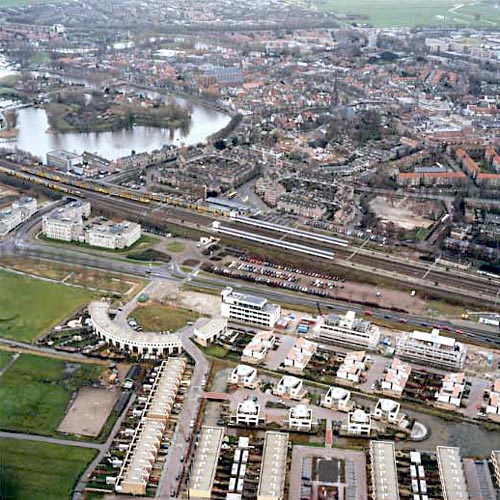
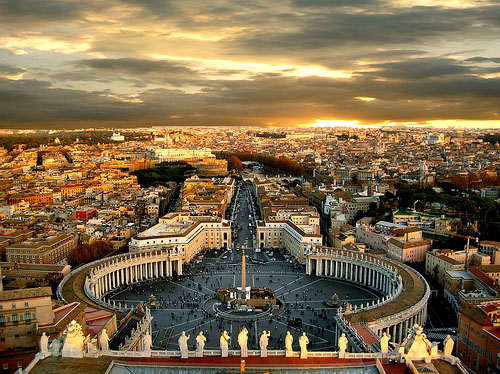
That's how Danny Chew, he of the Dirty Dozen en RAAM, used to describe his approach to riding on the road in Pittsburgh in the winter. It's a simple approach, essentially meaning that any decent day you get, you try to ride, because between November and April, there will be plenty indecent ones. Decent as in: no snow or ice, and temperatures above your personal tolerance level. Since we got back from Rome (where we had coffee outside, in the sun) a little over two weeks ago, I've had to use the same approach here in Holland. It had gotten cold while we were gone, and the first day back riding to Amsterdam, I got confirmation when I saw a cat walk across the ice outside of Weesp. Having done nothing on the trip for five days straight, I was determined to get a full week of riding to the city, even if it would be a sub-freezing one. In Milwaukee, I lowered my personal threshold to about 10 Fahrenheit (-12 Celsius), so I'd get through a little bit of Dutch frost. The second morning was cold and clear, and just like a few weeks earlier, I saw the sun rise early in the ride. This time, however, it looked more like a radioactive blood orange, which I'm sure had to do with the cold air. The third day was notable too, because as I was plodding my way across the railroad bridge outside of Weesp I got passed by a very sharp looking dude on a Fort cross bike. There was no way I was going to try to get on his wheel, and not just because on the way in I tend to take it easy. This looked like a guy who was in the middle of cross season. My streak ended on that third day, because on Thursday it snowed, the beginning of a week with more snow and generally sketchy conditions on the roads. I rode the weather for as long as I could--and I got back into it as soon as it was possible again, last weekend. I had another three-day streak that may well prove to be the conclusion to my riding in 2009. Saturday a Lage Vuursche coffee ride on the mountain bike, as it was still slick here and there. In one turn, in Hollandse Rading, the fat tires kept me upright where the skinny tires might have been inadequate. The next day, a regular winter Sunday ride, was a few degrees above freezing, and I got a real ride (= no coffee stop) because my Sunday guys, the ones who insist on riding through the woods this time of year, never made it. One of them took a hard fall on the icy trails, and they had to cut their ride short. So much for riding the tractor this time of year. After learning the news, I just continued my loop, riding 38 winter miles on just one banana. This was after a big dinner the night before--don't try this on snack food or you'll bonk horribly (to add another Danny term). Monday was sunny, calm, and again above freezing. It's the holidays, so no reason to pass up an opportunity like that. I did the hooky loop again, averaging 18.5. December 31 is tomorrow, so perhaps I can add a few more miles to the annual mileage I'll be calculating in a little less than 24 hours. Don't touch that dial!
Tuesday, December 22, 2009
Obama's First Year: The World As It Is
It's been busy since the trip to Rome, and there has been snow, which has kept me off the bike and is making me cranky. But I did do an-op ed for the holiday editions of the GPD newspapers over the weekend, and I just saw that one paper has picked it up already. It's an evaluation of Obama's first year in office and addresses the criticisms from the right and left by arguing that given the challenges a year ago, he's done pretty well. Pretty well would already apply if all he had done was avoid big blunders or disasters, but I argue the president has done better. Perhaps more important, through his thoughtful, deliberate approach to the challenges he has faced, we can have some confidence that things will continue to be handled in a serious and pragmatic manner. This is quite a bit to hope for (in case you're disappointed now). Without the necessary votes in Congress, or a certain convergence of your plans with the interests of powerful, independently acting nations such as Russia and China (or Brazil, or India), not much is going to get done. So stop the timidity talk. It's called pragmatism, and it's a requirement for an American president like rarely before. Anyway, read all about it (in Dutch). I actually managed to bring cycling into the piece, by quoting my old cycling mentor and former legitimate amateur racer, Thijs, who casually used to say: "yes, go try do it" whenever you'd criticize the performance of one or other cyclist on tv.
Tuesday, December 8, 2009
My Own Private Hooky Ride
It was calm, it was sunny, and it was not too cold. So even though I have stuff to do, I just had to take advantage, also because I'll be on the road for the next five days with no opportunity to ride or do much of anything else. So at 2:30 I sneaked out for a quick, hour and ten minute, 21 mile loop by way of Vreeland, Loenersloot, Baambrugge, Abcoude, and Weesp. It's all pretty, but you've got to love the little river Gein. All small ring, but still 18.3 average, which actually was a bit too fast given that I had just skated yesterday. It's good to ride after putting all that pressure on the legs, but it's important to be spinning. I was spinning today (39x15), but maybe just a little too fast. Must have been the weather. On the way into town I chased down my old neighbor Sabina, a year-round commuter, who had been skating this afternoon. She was riding the 10 miles home from the Amsterdam speed skating oval, because she knows the right way to enjoy yourself and stay in shape.
Sunday, December 6, 2009
Surging in Afghanistan
The New York Times reports on how President Obama came to his decision to send the extra troops in support of (a modified version of) General McChrystal's new strategy. Early on, the president came to the conclusion that the consequences of failure in the region are unacceptable. After that, it was primarily about finding an approach that has a chance to work in a reasonably short period of time so that the Western role in the country, at least the leading part of it, can be temporary. We're looking to turn things around in Afghanistan, a little like we helped turn things around in Iraq after 2006, so that there will be a chance for a more favorable development--for ourselves and for the people there. The former won't happen without the latter. That's all we can do, really: give ourselves and the people there a chance. There are too many uncertain factors, too much burdensome history in both places, to use words like "winning," or "resolution." At the same time, Iraq since 2006 has shown that apparently unstoppable downward slides also can be halted and partly reversed. What this NYT article is lacking is significant detail on how the president and his advisers defined the consequences of failure (presumably the result of a decision now to pull out of Afghanistan)--which doesn't mean that such a definition, such a discussion doesn't exist in the White House (or that the Times didn't do an article on this earlier). When I try to imagine the possible consequences of taking the advice of the many proponents of giving up on Afghanistan, I don't feel reassured at all that a withdrawal now would not make things worse for everyone except the Taliban and Al Qaeda.
Elaboration: What I forgot to highlight from the Times article is how it reports on Obama's dismay about the cost of all this: human and financial, and how conscious everyone around the table was of earlier cases of "escalating" a foreign war (Vietnam under Johnson being the classic case). Anyone who knows anything about, for example, the Vietnam case will understand how this is different, and how the term "escalation" is hardly appropriate here. Maybe I'll elaborate more on this last point later. In the meantime, the Times piece is worth reading in its entirety.
Elaboration: What I forgot to highlight from the Times article is how it reports on Obama's dismay about the cost of all this: human and financial, and how conscious everyone around the table was of earlier cases of "escalating" a foreign war (Vietnam under Johnson being the classic case). Anyone who knows anything about, for example, the Vietnam case will understand how this is different, and how the term "escalation" is hardly appropriate here. Maybe I'll elaborate more on this last point later. In the meantime, the Times piece is worth reading in its entirety.
Subscribe to:
Posts (Atom)